Hyderabadi Khubani Ka Meetha: Have You Ever Thought, Is It Just a Traditional Dessert or a Nutritional Powerhouse?
When I talk about Hyderabad, two things immediately come to mind:
The Hyderabadi foods, and in the Hyderabadi foods, their special dessert, Hyderabadi Khubani Ka Meetha.
I always noticed that when I cooked apricots in my kitchen, the beautiful smell of khubani spread all over my sweet home.
Read more about why apricots are golden fruits.
I’ve always seen this dessert, Hyderabadi Khubani Ka Meetha, as more than just a sweet treat.
Read more about my favourite khubani ka meetha recipe.
But lately, many of my health-conscious friends and relatives and my respected international readers have been asking me, “Is it healthy? What about the nutrition?” and my answer is yes, of course.
Read more about when I start the preparation of khubani meetha.
Today, I want to take you on a journey through my kitchen and share my thoughts you might not have considered.
Read about the best desserts to try online.
Let’s talk about Hyderabadi Khubani Ka Meetha from a traditional and nutritional perspective.
See my signature product.
The Royal Touch: Why We Love Hyderabadi Khubani Ka Meetha
Before we delve into the vitamins and minerals, let’s talk about the soul of this Hyderabadi Khubani Ka Meetha dish.
“Khubani” is the Urdu word for “apricot”.
Hyderabadi Khubani Ka Meetha dessert was brought to India, Hyderabad, by the Mughals, and over centuries, it became the “Shadiyon wala Meetha”, our childhood meetha (the wedding dessert) of Hyderabad.
Read more about why my homemade desserts are better.
When I prepare this at home after marrying into a Mughal family, I feel like I am so lucky to have Mughal Hyderabadi in-laws.
Read more about when I first made Khubani dessert for my in-laws.
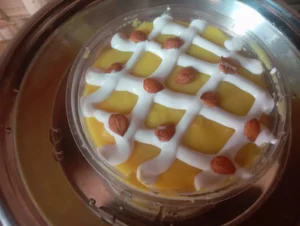
The deep orange colour, the smooth texture, and the crunch of the apricots and almonds inside the apricots make it a royal luxury experience.
Read about frequently asked questions/answers.
But as a wife and a mother, I also look at what I am feeding my family.
Now I am discussing A Nutritional Perspective: What’s Inside?
Most people see “dessert” and think “sugary dessert”.
But Khubani Ka Meetha is unique in nature because its main ingredient is a super element: dried apricots.
1. A High-Fiber Hero
Did you know that dried apricots are packed with dietary fibre?
When I slow-cook the imported apricots for my family, I know that this fibre helps in digestion.
Especially during Ramadan, after a long day of fasting, our stomach needs something gentle yet effective for digestion.
Khubani provides significant nutrients.
2. Vitamin A & Eye Health
Apricots are famous for being rich in vitamin A and beta-carotene.
These are essential for good vision and a strong immune system.
When you enjoy a bowl of my homemade Kubani Ka meetha, you’re not just eating my dessert, but you’re giving your body a boost of antioxidants.
3. Potassium for Heart Health
As you know, dried apricots contain more potassium than bananas!
Potassium helps in maintaining fluid balance in the body and keeps your blood pressure in check.
For my international readers who are looking for “healthy desserts”, this traditional Hyderabadi treat is a winner.
Traditional vs. Modern: How I Keep It Nutritional
I saw in many commercial shops that you might find traditional Hyderabadi Khubani Ka Meetha, including artificial food colours and an excessive amount of sugar.
But that’s not how I do it.
In my kitchen, I follow the traditional way because that is where the nutrition stays intact:
– I have not added any artificial colours:
The deep, beautiful golden-brown colour comes naturally from the slow-cooked apricots.
– I must control sugar:
I prepare my sugar syrup (sheera) carefully.
I use just enough to enhance the natural sweetness of the fruit without adding too much sugar.
– The Magic of the Apricot Seed:
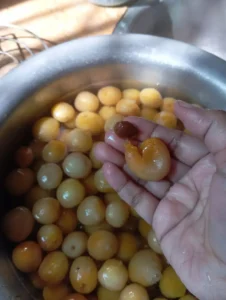
I never throw away the apricot seeds!
Inside each seed is a small almond.
This kernel is rich in healthy fats and proteins.
Read more about our mission.
Why is this the perfect iftar dessert, especially in my home
During Ramadan (Iftar), our bodies need an immediate energy boost.
The natural glucose in apricots, combined with the energy from the syrup, provides that “instant recharge” we all need after the Maghrib Adhan.
When my husband brings home those premium imported apricots, I start the preparation with a “Nutritional Niyyah” (Intention).
I want my kids to grow up eating desserts that are rooted in nature.
My Mini-Cups: Portion Control for the Health-Conscious
This is why I introduced my Special Kids’ Mini Khubani Dessert Cups.
I believe in “Everything in Moderation”.
These mini cups are perfect for children and for adults who want to enjoy the royal taste without worrying about calories.
It’s the perfect size for a nutritional treat!
Read more about our mini khubani cups.
I am telling you an interesting fact. How to Enjoy Khubani Ka Meetha the Healthy Way
If you are worried about the “sweetness”, here are a few tips from my kitchen:
I never add sugar when preparing custard for traditional Hyderabadi Kubani Ka Meetha.
Read about Khubani’s delight with custard.
Final Thoughts: A Message to My National and International Readers
Whether you are in Hyderabad, Pakistan, or reading this from the UK, USA, or Dubai, know that traditional food is often the healthiest food.
Our ancestors knew exactly what they were doing when they created Khubani Ka Meetha.
Read about the day when my husband smiled the most.
They combined essential apricot fruit with simple cooking techniques to create a masterpiece.
Read about why I love this dessert.
My Hyderabadi Khubani Ka Meetha is a tribute to this tradition.
It is my passion to bring this original, homemade, and nutritionally balanced dessert to your table.
Read more about some mistakes people make when storing this meetha.
What do you think?
Do you prefer your Khubani Ka Meetha with extra cream or plain?
And did you know about these amazing health benefits?
Let’s chat in the comments, or feel free to contact us!