Hyderabadi Khubani Ka Meetha – Preserving Flavors: How Food Blogs are Keeping Traditional Recipes Alive in a Digital World
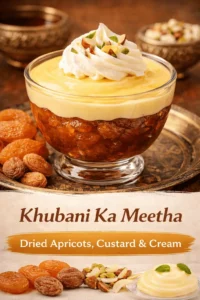
Hyderabadi Khubani Ka Meetha – Have you ever opened an old kitchen drawer and found a handwritten recipe on a yellowed piece of paper?
Maybe it’s your grandmother’s famous Biryani or that specific way she used to slow-cook apricots for a wedding dawat.
There’s something magical about those papers, isn’t there?
This is exactly why I started my journey.
Beyond just selling desserts, I realised that I was on a mission.
Today, I want to talk about something very close to my heart:
How food blogs are helping preserve traditional recipes.
Whether you are reading this from a cosy corner in Hyderabad, Pakistan, or you’re a diaspora kid in London or Toronto trying to recreate the “taste of home”, this one is for you.
Read more about when I started the preparation of Hyderabadi Khubani Ka Meetha.
The Digital “Dadi Maa’s” Diary
In the old days, recipes were passed down through whispers in the kitchen.
You learned by watching. But in 2026, life is fast.
We move cities, we move countries, and sometimes we don’t have the luxury of standing next to our elders for hours.
This is where the food blog becomes our modern-day “Dadi Maa’s Diary”.
When I write about it, I’m not just typing words.
I’m documenting a method that has existed for centuries.
By putting these steps online, we are making sure that even 50 years from now, a young person can search for “Authentic Hyderabadi Apricot Dessert” and find the exact, slow-cooked method that their ancestors used.
We are digitising our heritage so it never goes extinct.
Why “Handmade” Needs a Digital Home
A few months ago, I was talking to a regular customer.
She told me, “I tried making Hyderabadi Khubani ka Meetha myself, but it just didn’t have that deep golden colour.”
Through my blog, I was able to explain to her that the secret isn’t a chemical—it’s patience.
It’s the 12-hour soak and the low-flame simmer.
A product page on a website tells you the price, but a food blog tells you the soul.
See my signature product.
When we share these stories, we educate our readers.
We teach them why it matters.
We are telling our international readers that our food isn’t “fast food”—it’s an art form.
By explaining the why and the how, we preserve the respect for traditional cooking techniques that are often lost in the age of instant noodles and microwave meals.
Read more about why homemade desserts are better.
Bridging the Gap: National Roots & International Cravings
One of the most beautiful things about food blogging is how it connects us globally.
I see people visiting my site from the US, India, and the Middle East.
Why? Because they are hungry for authenticity.
Traditional recipes are like a language.
If you don’t speak it, you forget it.
Food blogs act as a translator.
Read more about the best desserts to try online.
For someone living in a cold apartment in New York, reading a blog post about it isn’t just about health tips—it’s a sensory trip back to their roots.
It reminds them that they belong to a culture that values richness, hospitality, and sweetness.
By documenting these recipes online, we ensure that a Pakistani kid born in Australia knows exactly what a “kernel” (badam) inside an apricot seed tastes like.
We are keeping the “taste memory” alive.
Read more about my signature serving style of Hyderabadi Khubani Ka Meetha.
The Role of Accuracy (Semantic SEO with a Human Touch)
Google loves a good story, but it also loves “expertise”.
Read more about I love Hyderabadi Khubani Ka Meetha.
When I write about Hyderabadi Khubani Ka Meetha, I use terms that are specific to our culture but explained for the world.
This is what we call “semantic SEO”—it’s about using the right context.
When a food blog explains the difference between “dried apricots” and “traditional Khubani”, it provides value that a simple recipe card cannot.
As a creator, I feel a responsibility to be accurate.
If I don’t document the exact ratio of sugar to fruit, or the specific way to layer the cream, that “original” taste might get diluted over time.
My blog is my commitment to keeping the “Original and Homemade” standard alive.
It’s my way of saying that even in the age of AI and automation, some things—like the perfect meetha—cannot be rushed.
Read more about traditional and nutritional perspectives of Hyderabadi Khubani Ka Meetha.
How You Can Help Preserve Tradition
You don’t have to be a professional blogger to help!
Every time you share a post, comment on a recipe, or even buy something for your kids, you are supporting a tradition.
Read more about why kids and adults love Hyderabadi Khubani Ka Meetha.
When you support local food brands that tell their stories, you are voting for the survival of authentic flavours.
You are saying “No” to bland, factory-made food and “Yes” to recipes that have a heartbeat.
Read more about the ultimate dinner party guide.
My Promise to You
At Hyderabadi Meetha Online, my kitchen will always be a place where tradition is respected.
I will keep writing, keep cooking, and keep sharing the little secrets that make our Hyderabadi culture so sweet.
Read more about my favourite dessert.
Because at the end of the day, a recipe isn’t just a list of ingredients.
It’s a gift from the past that we are holding in trust for the future.
Read more about our mission.
What about you? Is there a recipe in your family that you’re afraid might be forgotten?
Or a dish that always reminds you of a certain person?
Let’s chat in the comments, or feel free to contact us! I’d love to hear your “flavour stories”.